

If you have ever wondered why so many “accessible” spaces still do not work in real life, this conversation will hit home.
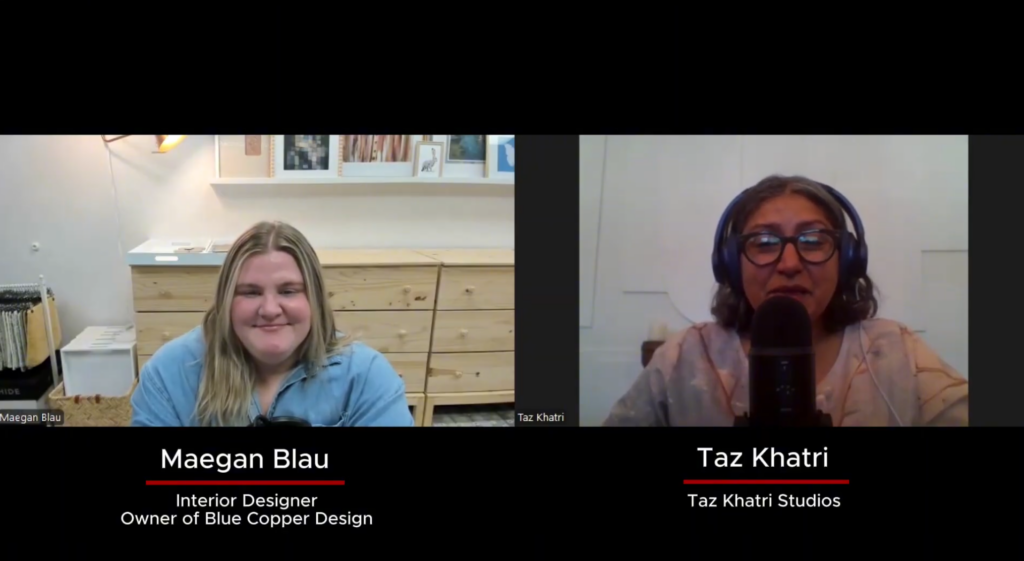
I recently sat down on the Tea with Taz podcast to talk about what accessible design actually looks like beyond the checklist. The version that people live with every single day, not the version that only exists on paper
This episode dives into the gap between compliance and real usability, and why the way we approach accessibility in design needs to evolve fast.
Accessible Design Is Not the Same as ADA Compliance
Let’s get one thing straight. Meeting ADA standards does not automatically mean a space works.
The Americans with Disabilities Act set a baseline. It was never meant to define great design. It was meant to create minimum access.
In the podcast, I break down how that minimum often falls short in residential design. Clearances might technically work, but they do not always feel comfortable. Layouts might pass inspection, but they still create daily friction.
Good design should go further. It should support how someone actually moves, lives, cooks, rests, and functions in their space.
That is where accessible design becomes something entirely different from compliance.
The Problem With “Accessible on Paper”
One of the biggest themes in this conversation is the disconnect between design intent and lived experience.
On paper, a space can look perfect. Dimensions line up. Requirements are met. Everyone signs off.
Then someone moves in and realizes they cannot turn comfortably in the bathroom. Or reach storage without strain. Or navigate the kitchen without constantly adjusting.
That is not a design success. That is a design miss. Accessible design has to be tested against real life, not just drawings and codes.
Designing From Lived Experience
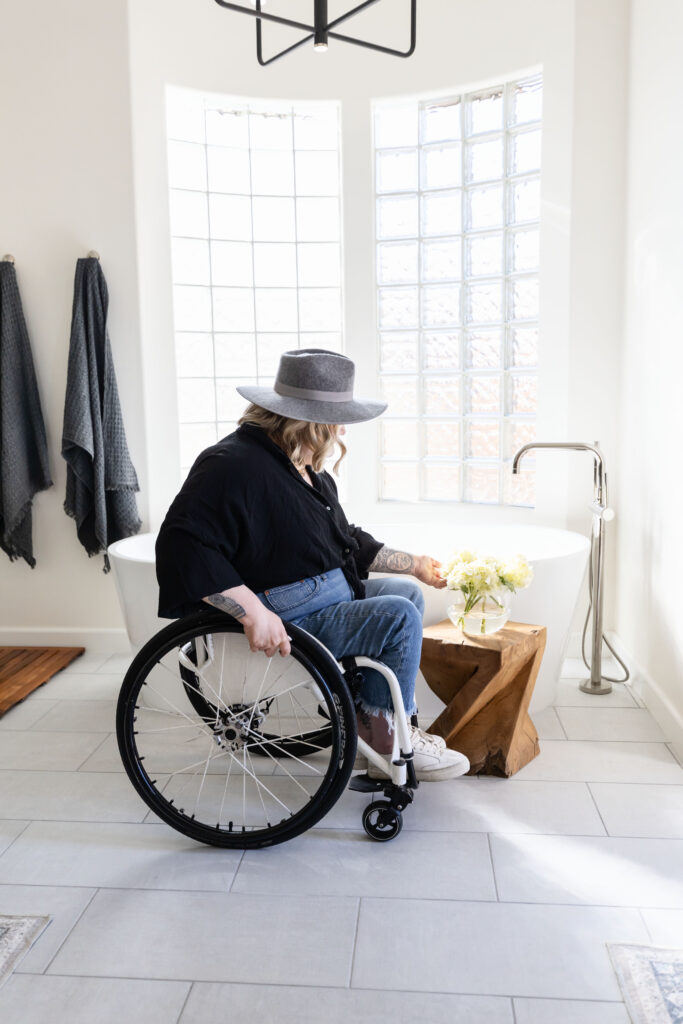
As a wheelchair user and interior designer, I approach every project from a different starting point.
I am not guessing what might work. I am designing from experience.
In the episode, I share how that perspective shifts everything. It changes how we think about circulation, transitions, storage, and materials. It also challenges the idea that accessibility limits creativity.
It does not.
In fact, it forces better design decisions. More intentional layouts. Smarter details. Spaces that feel effortless instead of forced.
Why the Industry Needs to Catch Up
The design industry is starting to talk more about accessibility. That is a good thing.
But we are still behind.
Most homes are not built with long term accessibility in mind. Most renovations treat it as an afterthought. And many designers are still relying on outdated standards without questioning how they perform in real life.
That is exactly why conversations like this matter.
Accessible design is not niche. It is not temporary. It is not only for a specific group of people.
It is a smarter way to design, period.
What You Will Take Away From This Episode
This is not a surface level conversation. It is a direct look at what is missing and what needs to change.
You will walk away understanding:
- Why ADA compliance is only the starting point
- How accessible design works in real homes
- Where most designs fall short
- What to consider if you are building or renovating
- Why designing for accessibility improves every space
Listen to the Full Conversation
If you care about design that actually works, this episode is worth your time.
Watch the full interview here:
Tea with Taz podcast episode featuring Maegan Blau
Final Thoughts
Accessible design is not about checking boxes. It is about creating spaces that support real people in real ways.
The more we push beyond minimum standards, the better our homes become. Not just for today, but for the long term.
And if the industry is serious about designing for how people actually live, then it is time to raise the bar.


